
Making a major investment- particularly when it involves transformative technologies- can be daunting. Seven reasons for making the push to smart factory technology are highlighted



Making a major investment- particularly when it involves transformative technologies- can be daunting. Seven reasons for making the push to smart factory technology are highlighted

It takes into account many kinds of waste, including the waste of excessive human motion, and aims to integrate each step of production into a holistic, efficient process that reduces cost and improves overall revenue

Unpanned downtime in manufacturing is one of the primary scenarios that most facilities strive to avoid.

Machine downtime and outages are not only frustrating, they also generate high costs for companies and can have a significant impact on the entire organization.

Smart factory term is becoming more and more common, usually in conjunction with Industry 4.0, but it isn’t always exactly clear to what it is referring to.

Before the pandemic, 38% of manufacturers had trouble finding candidates with the right skills and today the number is 54%.
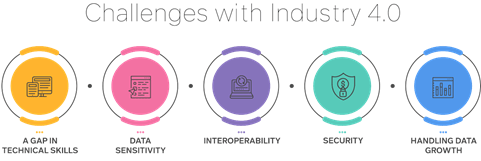
With cyber-physical systems, augmented reality, the Industrial Internet of Things (IIoT), and cloud computing all working in harmony, there is no limit to what Industry 4.0 can bring to factory settings and beyond.

These misalignments fester under the surface leading to suboptimal results: lower margins, late shipments, and lower trust relationships with suppliers.

Harmony between engineers and salespeople is not only possible with the right platforms and mindset, but also a business imperative for companies that make custom-engineered products.

There are many types of manufacturing companies that all deal with a range of problems in their day-to-day work. Of those who have moved over to our ERP system, MONITOR G5, we’ve identified the three main challenges they all had in common before making the switch.

Converging information technology (IT) and operational technology (OT) offers many benefits including lower risks, better decision- making and lower overall costs

Introducing Industry 4.0 is always a disruptive and challenging process for businesses and their employees. Manufacturers are progressively getting familiar with the idea of the smart factory and it is becoming hard to ignore its advancements towards becoming the...